(Réplica do selo de Leung Jaan feito em inscultura sigilar pelo Patriarca Moy Yat
a pedido de Ip Man em pessoa. A peça original faz parte da coleção "Ving Tsun Kuen Kuit)
(Replica of Leung Jaan's seal made on chop stone insculture by Patriarch Moy Yat at the request of Ip Man himself. The original piece is part of the collection "Ving Tsun Kuen Kuit")
Na próxima Quinta-feira as 20h , teremos um "Hangout" do Google, no qual falarei ao público da Moy Yat Ving Tsun Martial Intelligence e ao público em geral sobre "A Vida do Patriarca Leung Jaan".
Não vou falar muito dele aqui para não estragar as surpresas que aguardam a todos, mas posso adiantar que muito antes de Donnie Yen personificar o Patriarca Ip Man em 2008, Leung Jaan já tinha inúmeras obras televisivas, cinematográficas e literárias a seu respeito. O que talvez explique isso, é o fato de que apenas em sua geração, Leung Jaan não só conseguiu trazer à luz do grande público o que era esta arte até então "secreta" chamada "Ving Tsun" como também passara a ser chamado de "O Punho de FaatSaan(Foshan)".
Next Thursday at 8:00 p.m(Brazil´s official time)., we will have a Google Hangout, in which I will speak to the public of Moy Yat Ving Tsun Martial Intelligence and the general public about "The Life of Patriarch Leung Jaan."
I will not talk much of it here so as not to spoil the surprises that await everyone, but I can tell you that long before Donnie Yen impersonated Patriarch Ip Man in 2008, Leung Jaan already had countless television, cinematographic and literary works about him. What may explain this is the fact that only in his generation, Leung Jaan not only succeeded in bringing to light of the general public what was this "secret" art called "Ving Tsun", but he had also come to be called " The Fist of FaatSaan (Foshan) ".
(Os Mestres Seniores Julio Camacho e Nataniel Rosa na Vila natal de Leung Jaan)
(The Senior Masters Julio Camacho and Nataniel Rosa in the home village of Leung Jaan)
Graças aos incansáveis esforços de meu Mestre Julio Camacho, poderei falar de oitiva , já que ele esteve em pessoa , por mais de uma vez, nos locais relevantes à vida de Leung Jaan.
Thanks to the tireless efforts of my Master Julio Camacho, I can speak from what I learnt from him and from our Lineage, since he has been in person, more than once, in the places relevant to the life of Leung Jaan.
Para participar, basta comentar abaixo desta postagem aqui na página ou no facebook que a equipe entrará em contato com você para dar mais detalhes. O investimento é de R$ 25,00.
Espero encontrá-los on line!
To participate, just
comment below this post here on the page or on facebook that the team
will contact you to give more details.The investment is USD 8,00. I hope to meet you online!
The Disciple of Master Julio Camacho Thiago Pereira "Moy Fat Lei" moyfatlei.myvt@gmail.com
(Si Fu e Si Gung apreciam o portal de entrada da Vila Gu Lo, a Vila natal de Leung Jaan)
(Si Fu and Si Gung apreciating the view of the main gate of Gu Lo Village entrance)
Segundo a respeitada sinóloga Anne Cheng - "...A racionalidade chinesa,em vez de emergir dos mitos e afimar-se em oposição a eles, nasceu no seio do espírito ritual que lhe deu forma. Assim, a racionalidade designada pelo termo LI apresenta naturalmente semelhanças com seu homófono já citado , li ritual , mas também com o termo que veio a designar cultura: wen (man 文) , cuja grafia original pode ser interpretada como representando um dançarino disfarçado de pássaro com motivos de plumas sobre o peito. Por derivação chega-se ao sentido de "motivo", de "desenho", de "Traço" ... wen (man 文)passa a designar de maneira geral um signo , e partcicularmente um signo escrito, fundamento precisamente da cultura que os Zhou reivindicaram como sua característica maior , a ponto de atribuir o nome póstumo de wen (man 文)ao rei fundador da dinastia, ao qual sucedeu a bravura marcial do Rei Wu (Mo 武) que viria a se tornar o complemento tradicional da 'cultura' wen (man 文).(Histoire de la penseé chinoise , Éditions du Seuil, 1997)
According to respected synlogist Anne Cheng, "Chinese rationality, instead of emerging from myths and asserting itself in opposition to them, was born in the bosom of the ritual spirit which gave form for itself. Thus, the rationality designated by the term LI naturally bears similarities to its already mentioned homophone, li ritual, but also to the term that came to designate culture: wen (man 文), whose original spelling can be interpreted as representing a dancer disguised as a bird With feathered motifs on the chest. By derivation one arrives at the meaning of "motive," "drawing," "Trace" ... wen (man 文) generally designates a sign, and particulary a written sign, precisely founded on the culture that the Zhou claimed as their major characteristic, to the point of attributing the posthumous name of wen (man 文) to the founding king of the dynasty, to which succeeded the martial bravery of King Wu (Mo 武) that would later become the traditional complement of ' 'Wen (man 文)." - (Histoire de la penseé chinoise , Éditions du Seuil, 1997)
(Si Fu caminha nas vielas da Vila Gu Lo que levam até a residência de Leung Jaan)
(Si Fu walks along the way to Leung Jaan´s former house)
Diz-se que que é importante para um artista marcial ser proficiente em man 文 e mo 武. Ou seja, é importante que esta pessoa caminhe pela vida de forma equilibrada, tendo condições de se expressar tanto intelectualmente, verbalmente ou através da escrita man 文 , como também através de seu corpo em termos de marcialidade mo 武.
Leung Jaan era capaz de fazê-lo. Sua proeminência era tamanha no "Mo Lam", que as pessoas passaram a se referir a ele como "Jaan Sing Sang" (贊先生) ou "Senhor Jaan".
As fontes terciárias como "O registro de Mestres Famosos de Faat Saan da Chin Woo Faat Saan Association", contam que "Jaan Sang" (贊生) , o nome pelo qual a farmácia de sua família era conhecida pela população. Era confundido com "Jaan Seng", sendo "Seng" uma má compreensão do termo Sing Sang"(先生).
De forma geral, Sing Sang"(先生)era um termo restrito a quatro posições dentro da sociedade: Médicos, Si Fu, Intelectuais e Professores. Leung Jaan reunia as quatro características.
It is said that it is important for a martial artist to be proficient in man 文 and mo 武. That is, it is important that this person walks through life in a balanced way, being able to express himself either intellectually, verbally or through written (man 文), as well as through his body in terms of (mo 武) or "martial". Leung Jaan was able to do so. His prominence was so great in "Mo Lam" that people came to refer to him as "Jaan Sing Sang"(贊先生) or "Mister Jaan". Tertiary sources such as " Famous Masters of Faat Saan register of the Chin Woo Faat Saan Association" report that "Jaan Sang" (贊 生), the name by which the family pharmacy was known by the population, was confused with "Jaan Seng", being "Seng" a misunderstanding of the term Sing Sang "(先生). In general, Sing Sang "(先生) was a term restricted to three positions within society: Medical Doctors, Si Fu, Intellectuals and Professors. Leung Jaan met the four characteristics.
(O lendário ator Yuen Biao, interpreta Leung Jaan no blockbuster
vencedor de vários prêmios de 1982 "The Prodigal Son" )
(The legendary actor Yuen Biao plays Leung Jaan in the 1982
multi-award winning blockbuster "The Prodigal Son")
Nos anos '80, centenas de publicações de revistas americanas como a saudosa "INSIDE KUNG FU" que tentavam traçar o passado de Bruce Lee, falavam sobre Ip Man. E os filmes da série "O Grande Mestre" fizeram dele a figura mais icônica do Ving Tsun (Wing Chun) na atualidade. Porém, antes dele o ancestral com mais publicações literárias , novelas e filmes a seu respeito continua sendo Leung Jaan. Que por acaso foi Si Gung de Ip Man (O "Si Fu do Si Fu").
Na maioria de suas aparições cinematográficas, Leung Jan foi interpretado pelo talentosíssimo ator Yuen Biao. Como vemos acima , na cena do filme de 1982 "The Prodigal Son" ou "Ba Ga Jaai".
In the '80s, hundreds of American magazines publications was trying to trace the history of Bruce Lee, and started to write about Ip Man. And the movies from "Ip Man" franchise series made him the most iconic figure of Ving Tsun (Wing Chun) to pop culture nowadays. But before him, the ancestor with more literary publications and films about him was Leung Jaan. Who happened to be Si Gung of Ip Man (Or, "Si Fu of his Si Fu"). In most of his film appearances, Leung Jaan was played by the talented actor Yuen Biao (photo). As we see above, in the 1982 movie scene "The Prodigal Son" or "Ba Ga Jaai".
(Meu Si Fu Julio Camacho e meu Si Baak Nataniel Rosa, ambos Mestres Seniors da Moy Yat Ving Tsun na Vila natal de Leung Jaan)
(My Si Fu Julio Camacho and my Si Baak Nataniel Rosa, both Masters Seniors of Moy Yat Ving Tsun in the native village of Leung Jaan)
Leung Jaan teria nascido em 1826 na Aldeia de Tung Pin , Vila Gu Lo em Hok Shan. Ele era oriundo de uma família de educação refinada. Pouca gente sabe, mas Leung Jaan teve um irmão chamado Tak Nam, que foi preparado pelo pai para administrar os bens da família.
O nome de nascimento de Leung Jaan é "Leung Tak Wing" . Quando seu pai estabeleceu com caligrafia refinada o letreiro de sua farmácia, que era chamada de Wing Sang Tong (榮生堂) as pessoas confundiam Wing (榮) com Jaan(贊). E como no dia-a-dia não falavam o Tong (堂), o local passou a ser chamado de "Jaan Sang" (贊生).
Leung Jaan would have been born in 1826 in Tung Pin , Gu Lo Village in Hok Shan. He came from a family of refined education. Few people know, but Leung Jaan had a brother named Tak Nam, who was prepared by his father to administer the family assets. Leung Jaan's birth name is "Leung Tak Wing". When his father finely signed the sign of his pharmacy, which was called Wing Sang Tong (榮生堂), people confused Wing (榮) with Jaan (贊). And since in day-to-day they do not speak Tong (堂), the place came to be called "Jaan Sang" (贊 生).
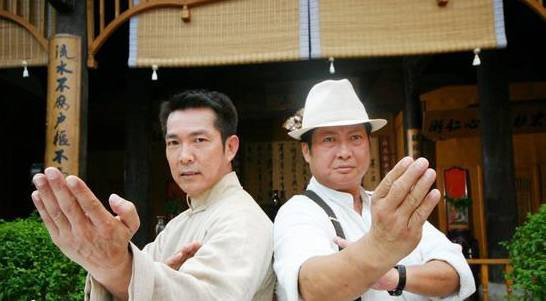
Em 2005, Yuen Biao ainda interpretou Leung Jaan na novela "Faat Saan
Jaan Sing Sang" ("O senhor Jaan de Faat Saan"). Porém, foi apenas em 2007,
que sob convite de seu Si Hing Sammo Hung (foto) , Yuen Biao volta para
sua interpretação definitiva e emocionante de Leung Jaan na novela "Wing
Chun", minha novela chinesa preferida (Ela necessita de persistência para assistir).
Com um ar muito mais maduro, e passando longe da comédia pastelão que
sempre rondou suas perfomances como Leung Jaan . Yuen Biao nos apresenta
um Si Fu de Ving Tsun consistente e que realmente lhe faz acreditar que
Leung Jaan pudesse ter sido assim. Ainda que Nicolas Tse , que
interpreta seu filho Leung Bik e Sammo Hung que interpreta Wong Wah Bo,
quase tenham comprometido a novela com suas péssimas atuações.
In 2005, Yuen Biao still played Leung Jaan in the soap opera "Faat Saan Jaan Sing Sang" ("Mr. Jaan from Faat Saan").
But it was only in 2007 under the invitation of his Si Hing Sammo Hung
(photo), Yuen Biao went back to his definitive and exciting
interpretation of Leung Jaan in "Wing Chun" soap-opera.
With an much more mature play, and going away
from the slapstick comedy that always prowled his performances as Leung
Jaan, Yuen Biao gives us a Ving Tsun Si Fu consistent and that really
makes you believe that Leung Jaan could have been that way. Although
Nicolas Tse, who plays his son Leung Bik and Sammo Hung who plays Wong
Wah Bo, have almost committed the show with their poor performances.
(A Linhagem Moy Yat com sua matriarca ao centro,
Sra. Helen Moy , na porta da casa de Leung Jaan)
(The Moy Yat Lineage , with Madam Helen Moy in the middle,
in front of Leung Jaan´s former house)
Leung Jaan ficou famoso pela sua atuação com a medicina junto aos necessitados, por isso, teria decidido por adotar o nome pelo qual estas pessoas se dirigiam a ele, e assim, ficou conhecido principalmente no "Mo Lam" como "Leung Jaan".
Foi exatamente esta dedicação aos menos privilegiados social e culturalmente que tocou profundamente o ancestral Leung Yi Tai , que lhe fora apresentado pelo seu amigo Leung Kai, e aceitaria Leung Jaan mais tarde como discípulo.
Leung Jaan became famous for his work with medicine with people in needy, so he would have decided to adopt the name by which these people addressed him, and so he became known mainly in "Mo Lam" as "Leung Jaan". It was precisely this dedication to the less socially and culturally privileged that deeply touched the ancestor Leung Yi Tai, who had been introduced to him by his friend Leung Kai, who would accet Leung Jaan later as a disciple.
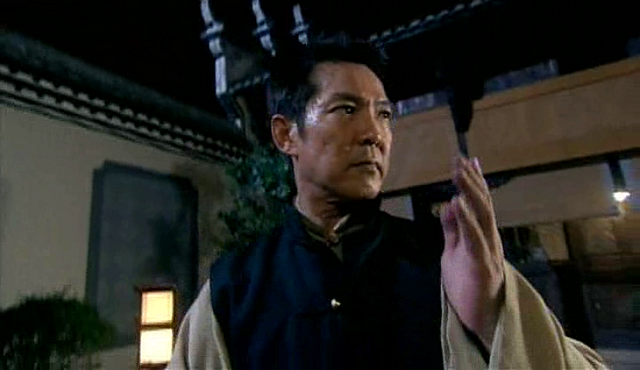
(Yuen Biao interpreta Leung Jaan em cena da novela "Wing Chun" de 2007)
(Yuen Bia plays Leung Jaan in "Wing Chun" drama series in 2007)
Acontece que mesmo sendo solicito aos mais necessitados quando se tratava de medicina, com o Ving Tsun não acontecia o mesmo: Leung Jaan teria sido extremamente rigoroso no aceite de seus discípulos, que em toda sua carreira somaram apenas seis pessoas. Sendo a última o Si Fu de Ip Man, Chan Wah Sun, que conseguiu fazer parte do grupo apenas depois de muita insistência de Fung Wah .seu amigo que já fazia parte da Família Kung Fu de Leung Jaan.
Além destes dois notórios discípulos, os filhos de Leung Jaan: Leung Bik e Leung Chun , foram seus mais conhecidos discípulos.
It turns out that even being nice to the needy when they came to medicine, with Ving Tsun did not happen the same: Leung Jaan would have been extremely strict in acceptance of his disciples, who throughout his career totaled only six people. The latter being the Si Fu of Ip Man, Chan Wah Sun, who managed to join the group only after much insistence by Fung Wah .your friend who was already part of the Family Kung Fu of Leung Jaan.
Besides those two disciples, Leung Bik and Leung Chun, both sons of Leung Jaan , were other two of his remarkable Kung Fu Family.
(Si Gung ladeado por Si Suk Felipe e Si Baak Gung Pete. à direita está o Si Baak Natan. Ambos observam a incrível maquete do King Fa Wui Gun no museu dedicado a Ópera Cantonesa, a qual acolheu três gerações de ancestrais do Ving Tsun)
(Si Gung flanked by Si Suk Felipe and Si Baak Gung Pete on the right is Si Baak Natan, both watching the incredible model of the King Fa Wui Gun in the museum dedicated to Cantonese Opera, which housed three generations of Ving Tsun ancestors)
(Lam Chin Ying em sua inesquecível interpretação como Leung Yi Taai em "Ba Ga Jaai" de 1982)
(Lam Ching Ying in his unforgettable interpretation as Leung Yi Taai in "Ba Ga Jaai" of 1982)
Na época em que Leung Jaan foi apresentado a Leung Yi Taai, o King Fa Wui Gung havia sido destruído (1854) por suspeita do governo, que viria a ser confirmada mais tarde, de que a entidade abrigava revolucionários que desejavam restabelecer a Dinastia Ming. Por ser um dos atores do grupo, Leung Yi Tai podia agora dedicar bastante tempo ao seu dedicado discípulo Leung Jaan.
By the time
Leung Jaan was introduced to Leung Yi Taai, King Fa Wui Gung had been
destroyed (1854) on suspicion of the government, which later came to be
confirmed, that it housed revolutionaries who wanted to re-establish the
Ming Dynasty.As one of the group's actors, Leung Yi Tai could now devote considerable time to his dedicated disciple Leung Jaan.
(Selo de Leung Jaan insculpido em pedra por Patriarca Moy Yat na coleção "Ving Tsun Kuen Kuit". No selo, é possível ver ladeando o nome de Leung Jaan,
quatro figuras no sentido anti-horário : Dragão, Fênix, Tigre e Tartaruga)
(Seal of Leung Jaan inscribed in stone by Patriarch Moy Yat in the collection "Ving Tsun Kuen Kuit" On the seal, one can see Leung Jaan's name in the middle of four figures counterclockwise: Dragon, Phoenix, Tiger and Turtle)
Um termo recorrente nos Analectos de Confúcius é o "Jun Zi" , que ele preferia interpretar como "Homem de Bem". Segundo ele, a grande razão do aprender é, portanto, tornar-se "Homem de bem". Em outras palavras, tomadas de um grande pensador confuciano do século XI , "aprender é aprender a fazer de si mesmo um ser humano."
Em sua gloriosa carreira, Leung Jaan recebeu inúmeros nomes pelos quais as pessoas passaram a conhecê-lo. Dentre eles, "Faat Saan Jaan Sing Sang" (佛山贊先生) ou "O senhor Jaan de Faat Saan" e também "Faat Saan Kuen" (佛山拳) ou "O punho de Faat Saan".
O primeiro nome , "Faat Saan Jaan Sing Sang" (佛山贊先生) , não só atribuía a ele a categoria de Sing Sang (先生) "Senhor", como o tratava como "O senhor Jaan" da cidade de "Faat Saan".
O segundo, falava do Mo Lam, pois numa cidade que era o grande centro das artes marciais da época, ele era "O punho"(Kuen 拳) da cidade.
A recurring term in the Analects of Confucius is "Jun Zi," which he preferred to interpret as "Good Man". According to him, the great reason for learning is, therefore, to become "a good man". In other words, taken from a great Confucian thinker of the eleventh century, "to learn is to learn to make of itself a human being." In his glorious career, Leung Jaan received countless names by which people came to know him. Among them, "Faat Saan Jaan Sing Sang" (佛山贊先生) or "Mr. Jaan of Faat Saan" and also "Faat Saan Kuen" (佛山 拳) or "The Fist of Faat Saan". The first name, "Faat Saan Jaan Sing Sang" (佛山贊先生), not only attributed to him the category of Sing Sang (先生) "Mister", as treated him as "Mr. Jaan" of the city of "Faat Saan" . The second, spoke of Mo Lam, because in a city that was the great center of the martial arts of the time, he was "The fist" (Kuen 拳) of the city.
(Publicação de 1981 sobre a famosa novela "Sr. Jaan de Faat Saan" exibida na mesma época. A novela com seu tema de abertura marcante,
ficou tão famosa que gerou um filme no ano seguinte: The Prodigal Son)
(1981 publication on the famous TV drama "Mr. Jaan from Faat Saan" exhibited at the same time.The show with its remarkable opening theme,
became so famous that it became a movie in the following year: The Prodigal Son.)
Acima de qualquer alcunha que tenha recebido ao longo da vida, Leung Jaan foi mais um dos ancestrais do Ving Tsun que desenvolveram sua humanidade ao longo da vida, conseguindo um grande êxito nesse quesito. Um Mestre de Ving Tsun que soube equilibrar sua trajetória em man 文 e mo 武 fazendo o Ving Tsun ficar conhecido e respeitado, já que seu desafio foi grande ao ser o primeiro ancestral a trazer o Ving Tsun à luz publicamente depois de cinco gerações.
Beyond any nickname he has received throughout his life, Leung Jaan was yet another of the ancestors of the Ving Tsun who developed his humanity throughout his life, achieving a great success in this matter. . A Master of Ving Tsun who knew how to balance his trajectory in man 文 and mo 武, making the Ving Tsun known and respected, since his challenge was great to be the first ancestor to bring the Ving Tsun to the light publicly after five generations.
Encerramos com essa banda cantando o tema de "Sr Jaan de Faat Saan" no natal no meio da rua:
We close the article with this strret band playing "Mr. Jaan of Faat Saan" in 2013 christimas:
Nos anos '80, centenas de publicações de revistas americanas que tentavam traçar o passado de Bruce Lee, falavam sobre Ip Man. E os filmes da série "O Grande Mestre" fizeram dele a figura mais icônica do Ving Tsun (Wing Chun) para a cultura pop. Mas antes dele, o ancestral com mais publicações literárias e filmes a seu respeito era Leung Jaan. Que por acaso foi Si Gung de Ip Man (Ou, "Mestre de seu Mestre").
Na maioria de suas aparições cinematográficas, Leung Jan foi interpretado pelo talentosíssimo ator Yuen Biao(foto). Como vemos acima , na cena do filme de 1982 "The Prodigal Son" ou "Ba Ga Jaai".
In the '80s, hundreds of American magazines publications was trying to trace the history of Bruce Lee, spoke about Ip Man. And the movies from "Ip Man" series made him the most iconic figure of Ving Tsun (Wing Chun) to pop culture. But before him, the ancestor with more literary publications and films about him was Leung Jaan. Who happened to be Si Gung of Ip Man (Or, "Master of his Master"). In most of his film appearances, Leung Jaan was played by the talented actor Yuen Biao (photo). As we see above, in the 1982 movie scene "The Prodigal Son" or "Ba Ga Jaai".
Em 2005, Yuen Biao ainda interpretou Leung Jaan na novela "Faat Saan Jaan Sing Sang" ("O senhor Jaan de Faat Saan"). Mas foi apenas em 2007, que sob convite de seu Si Hing Sammo Hung (foto) , Yuen Biao volta para sua interpretação definitiva e emocionante de Leung Jaan na novela "Wing Chun".
Com um ar muito mais maduro, e passando longe da comédia pastelão que sempre rondou suas perfomances como Leung Jaan , Yuen Biao nos apresenta um Si Fu de Ving Tsun consistente e que realmente lhe faz acreditar que Leung Jaan pudesse ter sido assim. Ainda que Nicolas Tse , que interpreta seu filho Leung Bik e Sammo Hung que interpreta Wong Wah Bo, quase tenham comprometido a novela com suas péssimas atuações.
In 2005, Yuen Biao still played Leung Jaan in the soap opera "Faat Saan Jaan Sing Sang" ("Mr. Jaan from Faat Saan"). But it was only in 2007 under the invitation of his Si Hing Sammo Hung (photo), Yuen Biao went back to his definitive and exciting interpretation of Leung Jaan in "Wing Chun" soap-opera. With an much more mature play, and going away from the slapstick comedy that always prowled his performances as Leung Jaan, Yuen Biao gives us a Ving Tsun Si Fu consistent and that really makes you believe that Leung Jaan could have been that way. Although Nicolas Tse, who plays his son Leung Bik and Sammo Hung who plays Wong Wah Bo, have almost committed the show with their poor performances.
PRATIQUE VING TSUN KUNG FU NO RIO! AGENDE UMA VISITA:
(Meu Si Fu Julio Camacho e meu Si Baak Nataniel Rosa, ambos
Mestres Seniors da Moy Yat Ving Tsun na Vila natal de Leung Jaan) (My Si Fu Julio Camacho and my Si Baak Nataniel Rosa, both Masters Seniors of Moy Yat Ving Tsun in the native village of Leung Jaan)
Meu Si Fu esteve por mais de uma vez em Gu Lo , vila natal de Leung Jaan. Leung Jaan se tornou tão celebrado desta forma, pois mesmo não sendo de Faat Saan(Fo Shan), sua habilidade marcial era tamanha, que recebeu vários apelidos que na verdade eram honrarias: "Senhor Jaan de Faat Saan", "O Rei do Ving Tsun", "O punho de Faat San" , etc.. etc...
Para se ter uma ideia, é como se um jogador argentino, se tornasse por um período a grande referência para os fãs de futebol no Brasil enquanto ele vivesse em nosso país.
My Si Fu spent more than once in Gu Lo, home village of Leung Jaan. Leung Jaan became so celebrated in this way, because although not being a native citizen of Faat Saan(Fo Shan), his martial prowess was such that received several nicknames that were actually honors, "Mister Jaan from Faat Saan", "The King of Ving Tsun, "" Fist of Faat Saan ", etc .. etc ... To give you an idea, it's like an Argentinian soccer football player (what americans call "soccer"), became for a time the greatest reference to football fans in Brazil while he lived in our country.
Porém, mais do que sua habilidade marcial, o que fez de Leung Jaan também muito conhecido, era a forma com que exercia sua profissão de médico-farmacêutico , que inclusive teria sido o fator que levaria Leung Yi Taai , a aceitá-lo como discípulo e transmitir o legado do Ving Tsun.
Leung Jaan cuidava das pessoas necessitadas sem cobrar nada, apenas cobrava pelos serviços as pessoas que tinham condições de pagarem por eles.
Na novela de 2007, vemos como essa atitude acaba por comprometer as finanças de sua Família.
But more than his martial skill, which made Leung Jaan also very well known, was the way he exercised his profession of medic-pharmacist, who also would have been the factor that would lead Leung Yi Taai, to accept him as a disciple and transmit the legacy of Ving Tsun. Leung Jaan took care of those in need without charge, only charged for the services people who could afford to pay for them. In the 2007 soap-opera we see how this attitude ends up compromising the finances of his family.
Acontece que mesmo sendo solicito aos mais necessitados quando se tratava de medicina, com o Ving Tsun não acontecia o mesmo: Leung Jaan teria sido extremamente rigoroso no aceite de seus discípulos, que em toda sua carreira somaram apenas seis pessoas. Sendo a última o Si Fu de Ip Man, Chan Wah Sun, que conseguiu fazer parte do grupo apenas depois de muita insistência de Fung Wah .seu amigo que já fazia parte da Família Kung Fu de Leung Jaan.
It turns out that even being nice to the needy when they came to medicine, with Ving Tsun did not happen the same: Leung Jaan would have been extremely strict in acceptance of his disciples, who throughout his career totaled only six people. The latter being the Si Fu of Ip Man, Chan Wah Sun, who managed to join the group only after much insistence by Fung Wah .your friend who was already part of the Family Kung Fu of Leung Jaan.
Um grupo internacional de cientistas que trabalham no projeto “TCM Cancer”, financiado pela União Europeia (UE), acaba de descobrir 100 compostos anticancerígenos em plantas e ervas usadas na Medicina Tradicional Chinesa.
O objetivo agora é utilizar essas substâncias para desenvolver tratamentos mais eficazes contra o cancro que possam substituir a quimioterapia, que provoca efeitos secundários graves.
"A maioria, se não todos, os fármacos usados na quimioterapia têm efeitos secundários graves, que podem afetar as células saudáveis, bem como funções essenciais do corpo," explica André Steinmetz, do Centro de Pesquisas Públicas de Saúde, no Luxemburgo, e líder do projeto.
"Por isso a procura e o estudo de novos compostos que matem especificamente as células cancerígenas, mas não têm efeitos secundários, ainda são necessários”, frisou o responsável.
O projeto “TCM Cancer” tem como foco sobretudo a identificação e caracterização de compostos usados na Medicina Tradicional Chinesa e que podem atuar contra os cancros da mama, pulmão e cérebro.
Fontes: Diário da Saúde
An international group of scientists working on the project "TCM Cancer", funded by the European Union (EU), has just discovered anticancer compounds in 100 plants and herbs used in traditional Chinese medicine. The objective now is to use these substances to develop more effective cancer treatments that can replace chemotherapy, which causes severe side effects. "Most, if not all, of the drugs used in chemotherapy have serious side effects, which can affect healthy cells as well as essential functions of the body," explains André Steinmetz fromthe Centre for Health Public Research in Luxembourg and leader of the project. "So the search and study of new compounds that specifically kill cancer cells but have no side effects, are needed," said the guardian. The "TCM Cancer" focuses mainly on the identification and characterization of compounds used in traditional Chinese medicine and that may act against cancers of the breast, lung and brain. Sources: Health Diary
PRATIQUE VING TSUN KUNG FU NO RIO! AGENDE UMA VISITA:
Uma vila chinesa veio recentemente à fama quando se descobriu que todo aquele que vive lá é um especialista em artes marciais.
A aldeia auto-sustentável, próxima as montanhas de Tianzhu, região central da China, parece ter evitado o mundo exterior.
A aldeia Ganxi Dong é a casa do povo Dong, uma das 56 minorias étnicas reconhecidas na China.
Incrivelmente, todos na aldeia isolada parece conhecer um estilo diferente de kung fu, informou Diário do Povo Online. (People's Daily)
A Chinese village recently came to fame when it emerged that everyone who lives there is a martial arts expert. The self-sustaining village, deep in the mountains of Tianzhu, central China, seems to have shunned the outside world. Ganxi Dong village is home to the Dong people, one of the 56 recognised ethnic minorities in China. Incredibly, everyone in the secluded village knows a different style of kung fu, reported People's Daily Online.
Aldeia auto-sustentável, nas montanhas exuberantes-verdes de Tianzhu, China, parece ter evitado o mundo exterior com a sua tradição
Self-sustaining village, deep in the lush-green mountains of Tianzhu, China, seems to have shunned the outside world with its tradition
Segundo relatos, alguns tipos diferentes de kung fu são praticados na vila . Todos são bem entendidos em sua arte, que parece ser o seu único hobby ao lado da agricultura. As armas vão desde apenas os punhos para varas e forcados. Imagens incríveis da aldeia surgiram recentemente, que tem sido amplamente compartilhada na mídia chinesa. Eles mostram alguns edifícios de estilo tradicional em um cenário rural .Na Vila pessoas de todas as idades brandem paus e espadas.
Eles praticam entre si, bem como por conta própria e não há exceções. Não está claro por que todo mundo pratica artes marciais ou quanto tempo esse tem sido o caso nesta vila.
According to reports, a few different types of kung fu are practised in the village.Everyone is well-practised in the art, which seems to be their only hobby aside from farming. Their weapons range from just fists to sticks and pitchforks. Incredible images of the village has recently emerged, which has been widely shared on Chinese media. They show a few traditional-style buildings in a rural setting.In the picturesque landscape, village folk of all ages brandish sticks and swords while mid-practise. They train by fighting each other as well as on their own and there are no exceptions. It's not clear why everyone practises martial arts or how long it's been the case.
Os locais têm duas teorias sobre a sua situação incomum: Uma afirma que a área sofreu pesados ataques regulares de feras que mataram seus rebanhos e feriam os aldeões.
Para tentar combater o problema, seis famílias tiveram que escolher um forte jovem para criar, desenvolver e aprender artes marciais.As Famílias modelaram suas ações baseando-se nos movimentos dos dragões, serpentes, tigres e leopardos.
À medida que cada família ia treinado em um tipo diferente de movimento, diferentes ramificações de kung fu foram inventadas. E para continuar a tradição, cada família tinha que continuar a treinar sob o seu estilo de artes marciais.
Outra teoria diz que, quando as famílias se mudaram para a área para configurar uma aldeia, eles eram freqüentemente saqueada por seus vizinhos.A fim de protegerem-se, os aldeões convidaram dois especialistas em artes marciais para ensinar-lhes a arte de combate.
As habilidades que aprenderam foi depois transferido para o resto dos aldeões.
No entanto, uma vez que tem sido uma tradição por um longo tempo, ninguém pode ter certeza do motivo real.
Locals have two theories about their unusual situation. One claims that the area suffered regular heavy attacks from wild beasts that would kill their livestock and injure the villagers. To try and combat the problem, six families had to pick a strong youth to create, develop and learn martial arts.They modeled their actions on the moves of dragons, snakes, tigers and leopards. As each family trained in a different type of movement, different strains of kung fu were invented. To continue the tradition, each family had to continue training under their strain of martial arts. Another saying goes that when the families first moved to the area to set up a village, they were frequently pillaged by their neighbours. In order to protect themselves, the villagers invited a two martial arts experts to teach them the art of combat. The skills they learnt was then passed on to the rest of the villagers. However, since it has been a tradition for a long time, no one can be certain of the real reason.
Si Fu e Si Gung na Vila Gu Lo (古勞農村)
Si Fu and Si Gung in the Gu Lo Village(古勞農村)
[foto de Mestre Anderson Maia (11GVT) , S.M.]
[photo by Master Anderson Maia(11G VT), S.M.]
Em 2009, Si Fu juntamente com o Grande Clã Moy Yat , visitou a Vila Gu Lo, terra natal do ancestral de nossa linhagem Sr Leung Jaan(贊先生). Local este que ele teria retornado após sua aposentadoria deixando sua farmácia sob os cuidados de seu discípulo Chan Wah Sun (Jaau Chin Wah).
In 2009, Si Fu along with the Great Clan Moy Yat, visited the village Gu Lo, birthplace of the ancestor of our lineage Mr Leung Jaan (贊 先生). Place this he would have returned after his retirement leaving his pharmacy under the care of his student Chan Wah Sun (Jaau Chin Wah)
(Si Fu e Si Baak Nataniel na Vila Gu Lo)
(Si Fu and Si Baak Natan in Gu Lo Village)
Nesta vila em particular, Si Fu comentou em suas visitas a ela em 2009 e 2012 sobre o Kung Fu ser o carro-chefe das atividades dos locais. Si Fu falou sobre o fato de que para eles soou muito espantoso ver estrangeiros com pele, cabelos , aparência em geral . Bem diferentes da deles, praticando o mesmo Kung Fu que eles.
Si Fu também falou sobre um sentimento de estar num local que parou no tempo e do valor que eles dão ao Kung Fu. Por isso, muitas vezes durante a prática houve muita cortesia entre aqueles que faziam Chi Sau.
In this village in particular, Si Fu said in his visits to this place in 2009 and 2012 on the Kung Fu be the flagship of the activities of the sites. Si Fu talked about the fact that for them sounded very amazing to see foreigners with skin, hair and overall appearance. Very different from theirs, even practicing Kung Fu like them. Si Fu also talked about a feeling of being in a place that stopped in time and the value they give to Kung Fu. So often during the practice was much courtesy among those making Chi Sau.
(Palestra com alguns Mestres dos Mestres do Conselho de Mestres da Moy Yat Ving Tsun na residência de Mestre Domenico Venturelli (11GVT), M.Q. )
(Lecture with some of the Masters of the Masters Council of Moy Yat Ving Tsun Martial Intelligence at Master Domenico (11G VT), Q.M.)
Nós não vivemos em vilas , estamos numa cidade grande conhecida no mundo todo. Assim como muitos praticantes ao redor do mundo. Mas isso não quer dizer que por não usarmos roupas chinesas, nem estarmos no meio rural, como num filme setentista da Shaw Brothers, nós , dentro desse mundo de fundo , chamado de Imanente, existem Tigres abaixados e Dragões escondidos. We do not live in villages, we are in a big city known worldwide. Like many practitioners around the world. But that does not mean that even if we do not wear Chinese clothes, or live in the countryside, like a seventies movie from Shaw Brothers, that we within this world, called immanent, there are crouching Tigers and hidden dragons.
A DISCIPLE OF MASTER JULIO CAMACHO (11G VT), S.M. Thiago Pereira "Moy Fat Lei" (12G VT), Q.M. moyfatlei.myvt@Gmail.com
![[詠春武林中外]](https://blogger.googleusercontent.com/img/a/AVvXsEhlLnesFRfK0erGhTOpixnkoRRJsAqQ5eSJgS9ObWAVF7t9WwaKFMB4Ikt1x-Pk8PRl7gn7npRvEB5Toqqfn1O92nVWWKeFV8eU09bAWzd-1n97PUCO5zyr_kos5qfAliI_vJmv-WYzIhiA-O21ZLsw68aNPq9qhml690g5d3ED2UaE58YEPALM9JZgSr4=s1040)




.jpg)