Mostrando postagens com marcador Siu Nim Tao. Mostrar todas as postagens

segunda-feira, 30 de março de 2020

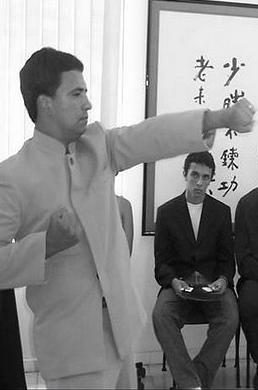
FONG SONG(放鬆): MASTER JULIO CAMACHO´S SECRET TO RELAX DURING THESE TIMES.

(Meu Mestre Julio Camacho no 1º museu de Ip Man em 2006)
(My Si Fu at the first Ip Man Museum in 2006)

Quando comecei a praticar o Sistema Ving Tsun, uma das coisas que me chamaram a atenção na forma de transmissão de uma sequência de movimentos(muitos chamam de "forma") como o "Siu Nim Tau". Era o fato de que o Tutor responsável, lhe mostraria apenas uma vez parte da sequência. Após este ato, você precisaria executá-la. E ao longo dos anos, me foi possível testemunhar diferentes reações à este tipo de transmissão. Muitas das pessoas apenas dizem coisas como: "Eu não lembro. Pode mostrar mais uma vez?" ou "Já esqueci tudo! Pode mostrar novamente?".
O que acontece, é que quanto mais vezes o Tutor fizer esta demonstração, mais chances se tem do tutorado "copiar" sua maneira de fazer,e não descobrir à sua própria. Com isso, passamos de uma transmissão Sistêmica da arte, para uma metódica. 
Anos mais tarde, no início dos anos 2010, presenciei o momento em que uma irmã Kung Fu chamada Cynthia Tong acessava o Cham Kiu. Si Fu disse à ela: "Cynthia, procura relaxar o olhar". - Aquelas palavras me marcaram muito: "Como relaxamos o olhar?" - De fato, a resposta de Si Fu para muitas de minhas questões costuma ser: "...Procura relaxar, Pereira..."

When I started to practice the Ving Tsun System, one of the things that caught my attention in the way of transmitting a sequence of movements (many call it "forms") like "Siu Nim Tau". It was the fact that the responsible Tutor would show you only part of the sequence once. After this act, you would need to perform it. And over the years, I have been able to witness different reactions to this type of transmission. A lot of people just say things like, "I don't remember. Can you show it again?" or "I've forgotten everything! Can you show it again?"
What happens, is that the more times the Tutor makes this demonstration, the more chances are that the student will "copy" his way of doing it, and not discover it on his own. With that, we went from a Systemic transmission of art, to a methodical one.

Years later, in the early 2010s, I witnessed the moment when a Kung Fu sister named Cynthia Tong accessed Cham Kiu. Si Fu told her: "Cynthia, try to relax your eyes". - Those words marked me a lot: "How do we relax our eyes?" - In fact, Si Fu's answer to many of my questions is usually: "... Try to relax, Pereira ..."
(Si Fu em primeiro plano e eu ao fundo durante prática de Siu Nim Tau)
(Si Fu in the foreground and me in the background practicing Siu Nim Tau)

Segundo as palavras de Si Fu sobre "relaxamento": " ...Pode-se dizer que o corpo humano está predisposto ao relaxamento, ou relaxação, para ser mais preciso. Os músculos do nosso corpo passam mais tempo relaxados que em tensão. Um bom exemplo disso, é o coração que executa uma ação que exige muita energia. Ele pulsa durante uma fração de segundo e passa quase três vezes mais tempo relaxando e se recuperando, já se preparando para a ação seguinte..."- Ele prossegue- "...Vale frisar que um dos objetivos do Ving Tsun é justamente a economia de energia,ou melhor, o não desperdício desta. Por este raciocínio, vemos que quanto menos energia gastarmos, menos energia precisaremos recuperar posteriormente..."

According to Si Fu's words about "relaxation": "... It can be said that the human body is predisposed to relaxation, , to be more precise. The muscles of our body spend more time relaxed than in tension. a good example of this, is the heart that performs an action that requires a lot of energy. It pulsates for a fraction of a second and spends almost three times more time relaxing and recovering, already preparing for the next action ... "- He continues- "... It is worth stressing that one of the objectives of Ving Tsun is precisely to save energy, or rather, not to waste it. From this reasoning, we see that the less energy we spend, the less energy we will need to recover later ..."
(Si Gung e Si Fu em momento de descontração nos EUA)
(Si Gung and Si Fu during some relaxing moment in US)

Em 1999, ano em que ingressei na Família Kung Fu, Si Fu falou sobre o termo FONG SONG(放鬆) da seguinte maneira: "...O termo no dialeto cantonês, utilizado para o relaxamento no Ving Tsun é 'FONG SONG(放鬆)'. Literalmente, FONG(放) pode significar 'largar' ou 'soltar' e SONG(鬆) 'afrouxar', 'aliviar', 'desatar'; assim FONG SONG(放鬆) que, em linhas gerais, costumamos traduzir por 'relaxar', pode assumir um significado mais amplo, mais genérico... "- Ele comenta então suas impressões sobre o termo: "...Pessoalmente acredito que vamos acumulando experiências positivas e negativas à medida que vamos vivendo cada vez que entramos em contato com alguma situação que nos remeta às experiências  negativas vividas, mesmo quando não percebemos, tendemos a entrar em tensão, física e/ou mental.  Dessa forma, ficamos amarrados, atados a uma realidade que não é a atual. Justamente aí encontro uma significação maior para FONG SONG(放鬆)..."

In 1999, the year I joined the Kung Fu Family, Si Fu spoke about the term FONG SONG (放鬆) as follows: "... The term in Cantonese dialect, used for relaxation in Ving Tsun is' FONG SONG (放鬆 Literally, FONG (放) can mean 'let loose' or 'let go' and SONG (鬆) 'loosen', 'ease', 'untie'; thus FONG SONG (放鬆) which, in general, we usually translate by 'relax', can take on a broader, more generic meaning ... "- He then comments on his impressions of the term:" ... I personally believe that we accumulate positive and negative experiences as we live each time we enter contact with some situation that leads us to negative experiences, even when we don't realize it, we tend to get into tension, physical and / or mental, so we are tied, tied to a reality that is not the current one. greater for FONG SONG (放鬆) ... "
(Vídeo-conferência com Si Fu durante a quarentena)
(Video-call with Si Fu during the quarantine)


Mais de vinte anos depois, já nos EUA quando estávamos prestes a adentrar este período de quarentena, Si Fu colocou seu entendimento sobre o tema, de uma forma muito mais elaborada:"...Na condição de seu Si Fu, e de um Si Fu que anseia em ser seguido. Tem um momento do meu estágio de compreensão do Kung Fu, que eu gostaria muito que você mais que tudo incorporasse: Que é a ideia de fazer as coisas com prazer, sabe?.." - Disse ele que prosseguiu depois: "...É a ideia de fazer as coisas sabe...Com...'Enjoyment'... "- Disse ele em inglês rindo. - "... Sobretudo as situações que são aversivas, situações que são difíceis, porque eu acredito verdadeiramente, como poucas coisas eu acredito. Que são as situações que se apresentam que fazem a gente ficar melhor, são exatamente essas dificuldades, que fazem a gente criar situações que nós não criaríamos se elas não se apresentassem.."

More than twenty years later, already in the USA when we were about to enter this quarantine period, Si Fu put his understanding on the subject, in a much more elaborate way: "... As his Si Fu, and as a Si Fu who longs to be followed. There is a moment of my understanding of Kung Fu, which I would like you to incorporate more than anything: That is the idea of doing things with pleasure, you know? .. "- He said that and then he continued : "... It's the idea of doing things you know ... With ... 'Enjoyment' ..." - He said - "... Especially situations that are aversive, situations that are difficult, because I truly believe, as few things I believe. That are the situations that present themselves that make us better, it is exactly these difficulties, that make the people create situations that we wouldn’t create if they didn’t present themselves. "
(Observando Si Fu demonstrar o Siu Nim Tau)
(Watching Si Fu demonstrates the Siu Nim Tau)

Assim, venho fazendo com sinceridade, o exercício de relaxar o olhar diante da vida. O mesmo olhar relaxado que me permite guardar tantas imagens em minha memória do que vivo na Vida Kung Fu. Seja FONG SONG(放鬆) ou "Enjoyment", a ideia é sempre procurar relaxar e curtir o momento..Mesmo os aversivos, como disse Si Fu.

Thus, I have been sincerely doing the exercise of relaxing my look on life. The same relaxed look that allows me to keep so many images in my memory of what I live in Kung Fu Life. Whether FONG SONG (放鬆) or "Enjoyment", the idea is to always try to relax and enjoy the moment ... Even the aversives ones, as Si Fu said.


The Disicple of Master Julio Camacho
Thiago Pereira "Moy Fat Lei"
moyfatlei.myvt@Gmail.com

quarta-feira, 25 de março de 2020

WHAT SIU NIM TAU(小念頭) TEACHES US IN TIMES OF CRISIS.

Si Fu certa vez me chamou à atenção, para quando me deparar com alguém que diz: "Eu gosto de lutar". -  "Provavelmente essa pessoa nunca lutou ou não sabe do que está falando" - Teria dito Si Fu. Ele também falou sobre a diferença grande entre uma luta de vida ou morte, e você assistir à um evento esportivo na TV: "...Quando você está sentado no seu sofá vendo luta no TV, quando você cansa, você apenas o desliga com o controle remoto..."
A crise que a luta traz junto dela parece sempre algo tão distante, que nunca de fato, nos imaginamos vivendo esse momento. Por isso, durante esse momento que o mundo atravessa, muitas pessoas estão se despedaçando emocionalmente. Porém, sabemos que entre o risco de ser contaminado e da economia de um país quebrar completamente, estamos apenas adentrando esse terreno inexplorado e nunca pensado por nossa geração. Assim, muitos tornam-se obcecados com a próxima notícia, com o aumento da contagem de vítimas ou com a inevitável crise econômica sem precedentes...

Si Fu once called my attention, when I come across someone who says: "I like to fight". - "Probably that person never fought or doesn't know what he is talking about" - Si Fu would have said. He also talked about the big difference between a life and death struggle, and you watching a fighting sporting event on TV: "... When you're sitting on your couch watching a fight on TV, when you get tired, you just turn it off with the remote control ... "
The crisis that a fight brings within always seems to be something so distant, that we never really imagine ourselves living in that moment. That is why, during this moment that the world is going through, many people are falling apart emotionally. However, we know that between the risk of being contaminated and a country's economy breaking down completely, we are just entering this unexplored and never thought  terrain. Thus, many become obsessed with the next news, with the increase in the count of victims, or with the inevitable unprecedented economic crisis 
Foi exatamente em Março de 2011, apenas um mês após abrir o primeiro Núcleo da Moy Yat Ving Tsun Martial Intelligence no Méier(foto), que Si Fu ao fazer uma visita com Si Suk Homero, apresentou uma tradução diferente sobre "Siu Nim Tau"(小念頭), que para mim chegou como uma grande novidade: "Pouco desejo". Onde "Nim"(小) seria "pouco(a)" e "Nim Tau"(念頭) algo como "Desejo", "Vontade" ou "Ambição".
Si Fu falou que quando estamos com "muito desejo" "Dai Nim Tau"(大念頭), tendemos a colocar camadas extras sobre o nosso "coração/consciência", o que em cantonês translitera-se como Sam(心). Esse processo de se colocar camadas extras sobre o coração, chamamos de "Ip Sam"(葉心) que seria algo como: "Encobrircoração/consciência com folhas".

It was exactly in March 2011, just a month after opening the first Moy Yat Ving Tsun Martial Intelligence School in Méier neighborhood(photo), that Si Fu when visiting with Si Suk Homero, presented a different translation about "Siu Nim Tau" (小 念頭), which came to me as a great news: "Little desire". Where "Nim" (小) would be "little " and "Nim Tau" (念頭) something like "Desire", or "Ambition".


Si Fu said that when we have much "desire " or Dai Nim Tau" (大 念頭), we tend to put extra layers on our "heart / conscience", which in Cantonese transliterates as Sam (心). This process of putting extra layers on the heart, we call "Ip Sam" (葉 心) which would be something like: "Cover the heart / consciousness with leaves".


No filme "Warriors Two" de 1978, que conta a história de como Fung Wah, convenceu Leung Jaan a aceitar Chan Wa Shun(futuro Si Fu de Ip Man) como membro de sua Família Kung Fu. Existe um pequeno diálogo, no qual Chan Wa Shun (Casanova Wong), traduz SIU NIM TAU(小念頭) como "Pequena ideia do início" (Como é mais comum ser traduzido). O personagem interpretado por Sammo Hung, Fung Wah, dá a seguinte resposta: "Si Fu diz que você não terá sucesso no aprendizado do Ving Tsun se você tiver muitas ideias e for muito ambicioso. Então por isso é chamado de 'pequenas ideias' ". - Completa Fung Wah (Sammo Hung).

In the 1978 film "Warriors Two", which tells the story of how Fung Wah, convinced Leung Jaan to accept Chan Wa Shun (future Si Fu of Ip Man) as a member of his Kung Fu Family. There is a small dialogue, in which Chan Wa Shun (Casanova Wong), translates SIU NIM TAU (小 念頭) as "Small ideas" (As it is more common to be translated). The character played by Sammo Hung, Fung Wah, gives the following answer: "Si Fu says that you will not succeed in learning Ving Tsun if you have a lot of ideas and are very ambitious. So that's why it's called 'small ideas'" . - Complete Fung Wah (Sammo Hung).
Dizem que Ving Tsun é para adultos. E aos quinze anos, sofri muito para conseguir me adaptar à prática do SIU NIM TAU(小念頭). O que de fato, não consegui naquele momento. O meu excesso de vontade de chegar rapidamente ao Domínio Mui Fa Jong, mas principalmente de aprender a lutar. Me impedia de apreciar o momento. Por isso que o Componente Associado "Lap Sau"(FOTO), foi tão difícil para mim.
Não conseguia compreender por estar com o "coração/consciência coberto com folhas"[Ip Sam"(葉心)], o que era mais importante à cada momento. Uma certa habilidade de elencar o que de fato importa, o movimento que importa, num processo dinâmico como o o do "Lap Sau". Isso é interessante, pois o Nim(念) de "Siu Nim Tau"(小念頭), também me foi dito quando comecei, que significava "atualizar o pensamento".

Ving Tsun is said to be for adults. And at fifteen years old, I suffered a lot to adapt to the practice of SIU NIM TAU (小 念頭). Which, in fact, I didn't get at that moment. My excess of desire to get to the Mui Fa Jong Domain quickly, but mainly to learn how to fight. It prevented me from enjoying the moment. That is why the Associated Component "Lap Sau" (PHOTO) was so difficult for me.
I couldn't understand because I had the "heart / conscience covered with leaves" [Ip Sam "(葉 心)], which was more important at each moment, a certain ability to rank what really matters, the movement that matters, in a dynamic process like that of "Lap Sau". This is interesting, because the Nim (念) of "Siu Nim Tau" (小 念頭), was also said to me when I started, which meant "to update thoughts".
Portanto, num momento como esse em que a luta está apenas começando ao redor de todo o planeta. Torna-se fundamental, aceitar essa realidade e diminuir o "desejo" de que tudo "volte ao normal". Já que o excesso de desejo poderá nos fazer buscar informações que não precisamos, não sabermos como elencar o que de fato é importante focar a cada momento, ou fantasiar com momentos futuros, sem estar atento ao momento presente e suas micro-transformações.
Aprender a lidar com a impermanência das coisas, e elencar uma prioridade por vez, parece uma boa lição do SIU NIM TAU(小念頭) para os tempos que estamos vivendo e para os vindouros também.

So, at a time like this when the fight is just beginning around the whole planet. It is essential to accept this reality and reduce the "desire" for everything to "return to normal". Since the excess of desire can make us search for information that we don't need, we don't know how to list what is in fact important to focus on each moment, or fantasize about future moments, without being aware of the present moment and its micro-transformations.
Learning how to deal with the impermanence of things, and listing one priority at a time, seems like a good lesson from SIU NIM TAU (小 念頭) for the times we are living in and for the ones to come as well.


THE DISCIPLE OF MASTER JULIO CAMACHO
Thiago Pereira "Moy Fat Lei"
moyfatlei.myvt@Gmail.com


quarta-feira, 10 de abril de 2019

WHAT I LEARNED FROM "SIU NIM TAU"

(Lucas Reis, filho do Daai Si Hing e Jade Camacho, filha do Si Fu)
(Daai Si Hing´s son and Si Fu´s daughter: Lucas and Jade)

Certo tempo atrás, caminhava com Si Fu pelas ruas do condomínio onde vive chamado Península, na Zona Oeste do Rio. Durante a caminhada, ele comentou que quando era mais jovem, na década de '80, o termo "Workaholic" estava na moda. Esta gíria em inglês, se refere à alguém que parece ser viciado em trabalho ou trabalhar demais. Si Fu disse que antes, existia uma valorização da pessoa que estava sempre ocupada, mas que hoje, alguém com mais tempo livre, socialmente era bem mais visto. Hoje, segundo ele, valoriza-se mais a chamada "qualidade de vida".

Some time ago, I was walking with Si Fu through the streets of the condominium where he lives called Peninsula, in the West Zone of Rio. During the walk, he commented that when he was younger in the 80's, the term "Workaholic" was fashionable. This slang in English refers to someone who seems to be addicted to work or to overwork. Si Fu said that before, there was a valuation of the person who was always busy, but that today, someone with more free time, socially was much more valuable. Today, according to him, the so-called "quality of life" is more valued.
(Si Fu orienta Aurea Celi em prática ao ar livre na Zona Oeste do Rio)
(Outdoor practice in West Zone of Rio in 2003)

Quando se é um Si Fu com pouco tempo de estrada como eu, é comum ter a possibilidade de transmitir o Domínio Siu Nim Tau mais vezes. Nestes momentos para mim, também é uma possibilidade de ressignifcar tudo o que aprendi anteriormente através de outras pessoas.
Observo atentamente como para executar um movimento, muitas vezes o aluno move uma parte do corpo que naquele momento não precisaria ser invocada.
Acredito que dentre tantos aprendizados, o "Siu Nim Tau" nos permite descobrir o que de fato é essencial. Como na vida, precisamos aprender a identificar dentre as demandas que nos são apresentadas diariamente, qual de fato é a essencial.

When you are a Si Fu with little road trip like me, it is common to have the possibility of transmitting the Siu Nim Tau Domain more often. In these moments for me, it is also a possibility to resignify everything that I learned previously through other people.
I observe carefully how to perform a movement, often the student moves a part of the body that at that moment would not need to be invoked.
I believe that among so many learning, the "Siu Nim Tau" allows us to discover what is really essential. As in life, we need to learn to identify among the demands that are presented to us daily, which in fact is the essential.
(Primeiro Siu Nim Tau do primeiro Mo Gun de Si fu na Barra da Tijuca)
(First Siu Nim Tau at Si Fu´s first school in Barra da Tijuca neighborhood)

Si Fu costumava dizer, que na lógica chinesa, as coisas mais importantes ficam à mostra. Exatamente para que passe despercebida. E no caso do Sistema Ving Tsun, o Domínio Siu Nim Tau,aquele que é considerado o mais importante do Sistema por muito Mestres,aparece logo de início.
Em nosso Grande Clã, quando estudamos os "Componentes Associados" ao Siu Nim Tau como: Paak Sau, Lap Sau, Daan Chi Sau e Seung Chi Sau. Nos dedicamos a nos tornar mestres em ocupar um único ponto, chamado: "Ponto de referência médio".
Percebi ao longo do tempo, que possuo uma certa dificuldade em perceber que nem tudo que me ocorre é de fato importante. Pensando na natureza do Siu Nim Tau, talvez fosse o caso de perceber que não nos é possível fazer tudo.

Si Fu used to say, that in Chinese logic, the most important things are on display. Exactly so that it goes unnoticed. And in the case of the Ving Tsun System, the Siu Nim Tau Domain, which is considered to be the most important of the System by many Masters, appears right from the start.
In our Grand Clan, when we study the "Associated Components" to Siu Nim Tau such as Paak Sau, Lap Sau, Daan Chi Sau and Seung Chi Sau. We are dedicated to becoming masters of occupying a single point, called: "Medium reference point."
I realized over time that I have a certain difficulty in realizing that not everything that occurs to me is really important. Thinking about the nature of Siu Nim Tau, perhaps it was the case to realize that we can not do everything.
Mas assim como numa prática do Componente "Lap Sau", conforme Raphael e Lucas praticam na antiga Unidade Méier em 2010 na foto acima. Acredito que possamos olhar para a vida, e desenvolvermos a capacidade de tomarmos decisões únicas que resolvem mil decisões futuras.
Então, como aquele novato que pergunta como podemos abordar determinado movimento hipotético de ataque contra nós, não nos preocupamos em responder. Pois graças ao Siu Nim Tau, aprendemos a ocupar o Ponto de Referência Médio. Sabendo onde ele está e como retornar para ele, a partir dele, podemos desdobrar as abordagen que se fizerem necessárias.

But as in a practice of the "Lap Sau" component, as Raphael and Lucas practice at the old Méier Studio in 2010 in the photo above. I believe we can look at life, and develop the ability to make unique decisions that solve a thousand future decisions.
So, like that newbie who asks how we can approach a certain hypothetical movement of attack against us, we do not bother to answer that. For, thanks to the Siu Nim Tau, we have learned to occupy the Medium Reference Point. Knowing where it is and how to return to it, from it, we can deploy the approaches that are necessary.


(Meu irmão Kung fu Rodrigo, executa o Siu Nim Tau 
no primeiro Mo Gun da Fam. Moy Fat Lei)

(My Kung Fu Brother Rodrigo´s Siu Nim Tau
 at the first Mo Gun of Moy Fat Lei Family.)

Si Gung costuma dar muita ênfase ao que chama de "Configuração Estratégica Inicial". Um posicionamento que assumimos junto de nosso parceiro de prática em cada trabalho realizado, com muita atenção cuidadosa, para que ao longo da prática sejam necessários apenas pequenos ajustes. Talvez por isso, a habilidade de executar o "Hoi Ma" (abertura da base), seja tão importante na execução do "Siu Nim Tau". Pois é desta posição inicial resultante do Hoi Ma, que se desdobrará todo o restante da sequência de movimentos.
Venho tentando com afinco, entender como essa lógica pode me ajudar a identificar qual é o ponto máximo de contribuição que posso dar, de modo a tornar sua execução algo que quase não demande esforço. Assim, ao invés de tentar fazer tudo, ou estar em todos os lugares ao mesmo tempo. Determinar este ponto máximo de contribuição, para que a partir dele, faça apenas pequenos ajustes.

Si Gung often puts a lot of emphasis on what he calls the "Initial Strategic Configuration". A position that we assume with our practice partner in each work performed, with very careful attention, so that throughout the practice only minor adjustments are necessary. Perhaps this is why the ability to perform "Hoi Ma" (opening the base) is so important in the execution of "Siu Nim Tau". For it is from this initial position resulting from the Hoi Ma, that the whole rest of the sequence of movements will unfold.
I have been trying hard to understand how this logic can help me to identify the maximum contribution point I can make, so as to make its execution something that almost requires no effort. So instead of trying to do everything, or being everywhere at once. Determine this maximum contribution point, so that from it, make only minor adjustments.
Em seu último vídeo para o seu canal de youtube "Kung Fu Life", Si Gung(foto) fala como "esforçar para não forçar". Lá ele impacta a audiência logo no início do vídeo, falando de uma perspectiva chinesa de "valorizar a facilidade e a falta de empenho".  Ele comenta, que em nossa cultura valoriza-se o "díficil" e no Pensamento Estratégico Clássico Chinês valoriza a "facilidade". Ele conclui dizendo que quando existe essa "facilidade", significa que "algo já havia sido preparado de antemão". Ele então cita o clássico "A arte da Guerra" dizendo que a preparação do terreno é fundamental para o exito.

In his latest video for his youtube channel "Kung Fu Life", Si Gung (photo) speaks as "To make an effort not to force". There he hits the audience early in the video, speaking from a Chinese perspective of "valuing ease and lack of commitment". He comments that in our culture the "hard way" is valued and in the Chinese Classic Strategic Thinking values the "easy way". He concludes by saying that when this "easy way" exists, it means that "something had already been prepared beforehand". He then cites the classic "The Art of War" stating that ground preparation is critical to success
Essa passagem do video de Si Gung, me lembrou uma conversa recente que tive com meu irmão Kung Fu Carlos Antunes(foto),em que ele me pediu que eu parasse com meu hábito de dormir poucas horas. Carlos comentou que pelos horários de minhas postagens em minhas redes sociais e dos horários das atividades ali colocadas, percebeu que eu estava dormindo pouco.
Ao contrário de muitos outros amigos que se impressionavam com essa habilidade, Carlos demonstrou preocupação. Além disso, pensei no mau exemplo que estava dando, ao valorizar o esforço hercúleo já que sou um Si Fu. Assim sendo, graças a essa conversa, reajustei completamente meus horários de forma a não fazer mais isso. Pois estava deixando de ver alguma coisa de antemão, que sempre me obrigava a dormir poucas horas.

This passage from Si Gung's video reminded me of a recent conversation I had with my Kung Fu Brother Carlos Antunes (photo), in which he asked me to stop my habit of sleeping a few hours. Carlos commented that by the time of my posts in my social media and the time of the activities posted there, realized that I was sleeping only few hours..
Unlike many other friends who were impressed by this ability, Carlos showed concern. In addition, I thought of the bad example I was giving, valuing the Herculean effort since I am a Si Fu. So, thanks to this conversation, I completely readjusted my schedules so I would not do it any more.Because I was missing something beforehand, which always made me sleep a few hours.
(Demonstrando o Siu Nim Tau com Mestre Felipe Soares 
em uma Universidade no rio em 2007)

(With Master Felipe Soares during a
 demo at a University in Rio in 2007)

Ser Si Fu não é fácil, pois os mínimos detalhes, inclusive os que você não sabe que existem em você, são absorvidos por seus alunos. Por isso, para uma pessoa expressiva como eu, preciso ter muito cuidado ao demonstrar uma sequência ou movimento. Qualquer expressão além do que o adequado, pode chegar para o aluno como "o jeito certo de fazer".
O Siu Nim Tau, nos ajuda a desenvolver a capacidade de usar o "Noi Lik" (energia interna). Ou seja, utilizar a energia do outro a nosso favor. E quando conseguimos fazê-lo, para quem olha de fora, parece que nem sequer fazemos qualquer esforço para executar um movimento. As vezes, até mesmo para nosso adversário, é essa a impressão.

Being Si Fu is not easy, because the smallest details, including those you do not know exist in you, are absorbed by your students. Therefore, for an expressive person like myself, I must be very careful in demonstrating a sequence or movement. Any expression beyond what is appropriate, can reach the student as "the right way to do".
Siu Nim Tau helps us develop the ability to use Noi Lik (internal energy). That is, to use the energy of the other in our favor. And when we can do it, for those who look from the outside, it seems that we do not even make any effort to execute a movement. Sometimes, even to our adversary, that's the impression.
(Si Fu executa o Siu Nim Tau, na antiga sede mundial da MYVT)
(Si Fu at the formet MYVT headquarters doing Siu Nim Tau)

Percebi após muitas orientações de Si Fu, que quanto mais "heróico" eu for em minhas participações, eu até resolvo, mas com muito mais esforço. É como se você parecesse estar sempre a postos quando necessário, assim cada vez mais nos apresentam mais opções e mais oportunidades, já que você é a pessoa que resolve.
É como aquela pessoa que sempre sonhou em alcançar um patamar em sua vida, seja ele qual for, e percebe que está se afastando cada vez mais do seu nível máximo de contribuição: "O efeito do sucesso destrói a própria clareza que, a princípio, nos levou a alcançá-lo."(McKeown, Greg. 2014). E esse processo, Si Gung chama de "Inversão Compensatória".

I noticed after many orientations of Si Fu, that the more "heroic" I am in my participations, I even resolve, but with much more effort. It's as if you seem to be always on the go when needed, so more and more we have more options and more opportunities, since you are the person who resolves.
It is like that person who has always dreamed of reaching a threshold in his life, whatever it is, and realizes that he is moving further away from his maximum level of contribution: "The effect of success destroys the very clarity that, at first, led us to achieve it. "(McKeown, Greg, 2014). And this process, Si Gung calls "Compensatory Inversion".
No início dos anos 2000, Si Fu dispôs uma série de pequenos quadros, onde em cada um ele aparecia em uma pose que remetia a um dos Domínios do Sistema Ving Tsun. Na foto acima, que ficava em um dos quadrinhos, falava-se do "Foco" no Domínio Siu Nim Tau.
Muitos anos depois de começar a prática do Siu Nim Tau, Si Fu falou duas coisas: A primeira, sobre a ideia de que num âmgulo de 180º, precisamos enxergar tudo enquanto fazemos Siu Nim Tau. Esses 180º são a parte "Yang", os 180º que ficam atrás de nós são a parte "Ying".  Por isso, deveríamos aprender a "relaxar o olhar".
Outro ponto interessante, é que ao ser perguntado sobre o "Foco" no Siu Nim Tau, Si Fu teria dito sobre a habilidade de considerar o todo num primeiro momento, e priorizar o que é fundamental.

In the early 2000s, Si Fu arranged a series of small pictures on Mo Gun´s wall, where in each he appeared in a pose that referred to one of the Domains of the Ving Tsun System. In the photo above, that was in one of the frames, it was spoken of the "Focus" in the Domain Siu Nim Tau.
Many years after starting the practice of Siu Nim Tau, Si Fu said two things: The first, on the idea that in a 180º angle, we need to see everything while doing Siu Nim Tau. These 180º are the "Yang" part, the 180º that are behind us are the "Ying" part. Therefore, we should learn to "relax our vision".
Another interesting point is that when asked about the "Focus" on the Siu Nim Tau, Si Fu would have said about the ability to consider the whole at first, and prioritize what is fundamental.
(Demonstração de Siu Nim Tau com os Mestres Diego e Felipe 
no aniversário de Si Fu em 2004 na Zona Oeste do Rio)

(With Master Diego and Felipe during a demo at Si Fu´s brithday in 2004)

Ao longo dos anos, essas falas me voltaram à mente por muitas vezes. Nunca fui bom em fazer escolhas. Por isso, deixo o coração me dizer qual direção seguir. E por saber que fazer escolhas é algo por vezes ingrato, acabei tomando contato com uma fala de Richard S. Westfall que dizia o seguinte: "Perguntaram a Newton como havia descoberto a lei da gravitação universal. 'Pensando nela continuamente' foi a resposta. Naquilo que pensava continuamente, ou seja, com exclusividade ou quase".  - O autor se referia ao fato de que Newton havia "criado um espaço" para se dedicar inteiramente a este estudo. Assim, talvez "foco" possa não estar apenas restrito a fazermos uma escolha do que é fundamental, mas também entender como abrir espaço em nossas vidas, para nos dedicarmos ao que de fato nossos corações pedem em determinado momento.

Over the years, these lines have come back to me many times. I've never been good at making choices. So I let my heart tell me which way to go. And knowing that making choices is sometimes ungrateful, I ended up making contact with a speech by Richard S. Westfall which read: "They asked Newton how he had discovered the law of universal gravitation." Thinking about it continually "was the answer. In what he thought continually, that is, with exclusivity or almost ". - The author referred to the fact that Newton had "created a space" to devote himself entirely to this study. So perhaps "focus" may not only be restricted to making a choice of what is fundamental, but also understanding how to make room in our lives, to dedicate ourselves to what our hearts actually ask for at a given moment.
(Prática de Siu Nim Tau durante evento de integração na praia)
(During practice on Sunday Morning on a west zone beach in Rio)

Por fim, pensando muito no "Siu Nim Tau", tenho me dedicado nos últimos tempos a enxergar o que estava deixando passar. Não ficar apenas reagindo ao que acontece, mas focalizar nas questões maiores que realmente importam. Não apenas ver os "pontinhos" de cada dia, mas entender, como na sequência de movimentos do Siu Nim Tau, a como ligá-los e perceber suas tendências.
Bom, um dia falo mais de Siu Nim Tau...

Finally, thinking a lot about "Siu Nim Tau", I've been trying to see what I was letting go of in recent times. Do not just be reacting to what happens, but focus on the bigger issues that really matter. Not only to see the "little matters" of each day, but to understand, as in the sequence of movements of the Siu Nim Tau, how to connect them and perceive their tendencies.
Well, one day I'll tell you more about Siu Nim Tau ...

The Disciple of Master Julio Camacho
Thiago Pereira "Moy Fat Lei"
moyfatlei.myvt@Gmail.com

quinta-feira, 15 de junho de 2017

Why Chi Sau ?(part2) : An understanding on Ving Tsun´s emblematic practice.

Photos by Glauco Gavioli 

(Com meu Mestre Julio Camacho em sessão de fotos) 
(With my Master Julio Camacho in photos session)

Na mesma proporção que causa fascínio e interesse para o praticante experiente de Ving Tsun, é exótico a grande maioria das pessoas, ainda que estas sejam pessoas que vivam no "Mo Lan" e por incrível que pareça, ainda que sejam também do "Ving Tsun Paai Bit".
 Falamos a primeira vez deste tema nesta página em Junho de 2016 . Você pode ler a parte 1 clicando (AQUI).

A primeira vez que um membro de nossa Linhagem toma contato com o "Chi Sau" é durante o "Siu Nim Tau" . Ao contrário do que o jargão diz, "Chi Sau" (黐手) significa "Membros superiores que estão em aderência" .  E ele pode ser praticado de duas formas: Com uma única mão, que chamamos de "Daan Chi Sau" (單黐手) , termo no qual  "Daan (單)" significa "Único(a)" (Single). Ou com duas : "Seung Chi Sau" (雙黐手).


In the same proportion as it causes fascination and interest for the experienced practitioner of Ving Tsun, it is exotic for a large majority of people, although these are people who live in "Mo Lan" and incredible as it may seem, some of them are still also from "Ving Tsun Paai Bit ".
We talked the first time in this article on this page in June 2016. You can read part 1 by clicking (HERE).

Once a member of our Lineage takes contact with the "Chi Sau" it is during the "Siu Nim Tau". Contrary to what the jargon says, "Chi Sau" (
黐手) means something like "Upper limbs in adhesion". It is capable of being used in two ways: With a single hand, we call "Daan Chi Sau" (單黐手), term in which "Daan (單)" means "Single" or using two : "Seung Chi Sau" (雙黐手).
(Nesta foto, um momento de muita emoção: 18 anos depois de aprender o 
Daan Chi Sau, 單黐手, Si Fu me dá a honra de posar comigo para uma foto histórica.)

(In this photo, a moment of great emotion: 18 years after learning Daan Chi Sau, 單黐手, Si Fu gives me the honor of posing with me for a historical photo.)

O que caracteriza o "Chi Sau" é o "Taan"(攤), "Bong"(膀) e "Fuk"(伏). No "Daan Chi Sau" (單黐手) não é diferente. Através desses dispositivos, aprendemos de uma forma muito especial, a nos manter em contato com o outro, de forma com que qualquer coisa que aconteça, neste caso, a ocupação da Linha Central, seja uma consequência da relação estabelecida e não através da vontade de qualquer um dos dois.

What characterizes the "Chi Sau" is the "Taan" (攤), "Bong" (膀) and "Fuk" (伏). In "Daan Chi Sau" (單黐手) is no different. Through these dispositives, we learn in a very special way to keep in touch with each other, so that anything that happens, in this case, the occupation of the Center Line, is a consequence of the established relation and not through the will of any of the two.

(Si Fu prepara-se para executar o Paak Da em mim após ocupar a Linha Central, 
em  mais um foto posada para a posteridade).

(Si Fu prepares to execute the Paak Da on me after occupying the Center Line,
In another photo posed for posterity).

Apesar de começar no Siu Nim Tau, o Chi Sau segue como a prática mais emblemática de "Mãos Livres" do Sistema Ving Tsun pelos Domínios seguintes. Esse "Chi Sau" , chamamos de "Seung Chi Sau" (雙黐手). "Seung"(雙) nesse caso, significa algo como "Duplo(a)"(Double). Por isso, a transição entre o "Taan"(攤), "Bong"(膀) e "Fuk"(伏) acontece simultaneamente com os dois braços.
Segundo a sinóloga Anne Cheng, se a cronologia fornece um quadro e pontos de referência de conjunto , para os pensadores chineses , o que está no cerne das discussões e que constitui problema, mas também o que está subentendido , considerado como evidente sem necessidade de ser explicitado.

Although starting in the Siu Nim Tau, the Chi Sau follows as the most emblematic practice of "Free Hands" of the Ving Tsun System for the following Domains. This "Chi Sau", we call "Seung Chi Sau" (雙黐手). "Seung" (雙) in this case means something like "Double " . Therefore, the transition between "Taan" (攤), "Bong" (膀) and "Fuk" (伏) happens simultaneously with both arms.
According to the synlogist Anne Cheng, if chronology provides a framework and points of reference for Chinese thinkers, what is at the heart of the discussions and what constitutes a problem, but also what is implied, considered as evident without need to be Explicitly.

Essa ideia de Anne Cheng,  pode ser associada também, quando percebemos o fenômeno do início da década de 2000 : "O Tigre e o Dragão"(Crouching Tiger, Hidden Dragon,2000) de Ang Lee. Na época, a audiência ocidental ficou consternada com as personagens que voavam durante os combates. Anne Cheng continua seu discurso, dizendo que ao contrário do discurso filosófico herdado do logos grego, que sente a necessidade constante de justificar seus fundamentos e proposições , o pensamento chinês , operando a partir de um substrato comum implicitamente aceito, é incapaz de apresentar-se como uma sucessão de sistemas teóricos...(Histoire de la penseé chinoise, Ed. du Seuil,1997).

This idea of Anne Cheng can also be associated with the phenomenon of the early 2000s: Ang Lee's "Crouching Tiger, Hidden Dragon"( 2000). At the time, Western audiences were perplexed With the characters who were flying during the fighting. Anne Cheng continues her discourse, saying that unlike the philosophical discourse inherited from the Greek logos, which feels the constant need to justify its foundations and propositions, Chinese thought, operating from an implicitly accepted common substratum, is incapable of presenting itself As a succession of theoretical systems ... (Histoire de la pensee chinoise, Ed. Du Seuil, 1997).
Si Fu hoje a meu ver, é uma pessoa que não aparenta ser quem é. A não ser que decida deixar explícitos seus conhecimentos, habilidade ou capacidade de comunicação. Ver Si Fu lidar com a maioria das situações, é como presenciar uma prática de Chi Sau: Ele não desperdiça energia, não força a relação e não dá nenhuma informação a não ser que queira. Assim, consegue ser respeitado, mantendo e variando a distância de seus alunos conforme for mais estratégico para a relação. Assim, a "Linha Central" está sempre ocupada por ele.

Si Fu today in my point of view, he is a person who does not appear to be who he is. Unless you decide to make his knowledge, physical ability, or ability of communication explicit. To watch Si Fu deal with most situations is like to watch a practice of Chi Sau: He does not waste energy, does not force the relationship and does not issue information on unless he wants to. Thus, He get respected, keeping and varying the distance of his students as more strategic for the relationship. Thus, the"Center Line" is always occupied by him.


The Disciple of Master Julio Camacho
Thiago Pereira "Moy Fat Lei"
moyfatlei.myvt@gmail.com